Reviewing Gate Silhouette Vector for Embroidery
As a designer who spends half my life staring at digitized files and the other half watching needles punch through fabric, I have learned to look past the glossy preview images. What matters is how a design behaves under tension, how it reads from three feet away, and whether it holds up after the third wash. Recently, I pulled Gate Silhouette Vector into my workspace to evaluate its potential for a upcoming line of botanical-themed home goods. This isn’t just another floral clipart; it is a structured piece of Illustrations that bridges the gap between rigid architecture and organic growth.
First Impressions: Structure Meets Softness
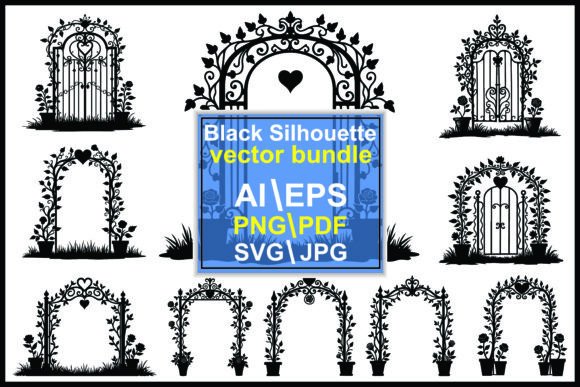
The immediate appeal of Gate Silhouette Vector lies in its contrast. You have the hard, linear geometry of wrought iron gates and arches juxtaposed against the fluid, curving lines of roses, vines, and grass. For an embroidery project, this balance is critical. Purely geometric designs can feel cold on soft textiles, while overly floral designs can sometimes lack definition. Here, the black silhouette style provides a bold anchor.
The mood is romantic but grounded. It feels like an entrance to a secret garden, which makes it incredibly versatile for storytelling in design. Whether you are creating a personalized gift for a wedding or branding a boutique’s packaging, the visual personality suggests elegance without being fussy. The inclusion of elements like the heart shape within the foliage adds a subtle layer of emotion that customers often respond to instinctively.
Real-World Application: The Tote Bag Test
To truly understand the utility of these Graphics, I imagined a specific scenario: a custom canvas tote bag for a local plant shop. Canvas is a sturdy, textured fabric that can swallow up fine details if the stitch density isn’t right. Using Gate Silhouette Vector as the central motif, I considered how the wrought iron bars would translate.
In this context, the design shines. The thick lines of the gate structure allow for solid fill stitches that cover the weave of the canvas effectively. The roses and vines, acting as decorative accents, break up the mass of the black silhouette, preventing the design from looking like a heavy, stiff patch. If I were producing this as a small shop product, I would likely use a dark green or charcoal thread for the gate to soften the starkness of pure black, while keeping the roses in a muted blush or cream. This approach turns a simple tote bag design into a piece of wearable art that signals quality and attention to detail.
Versatility Across Product Lines
Beyond totes, this design has legs in several other categories. For sweatshirt embroidery, the silhouette works beautifully on the chest or back. The ornate nature of the arch fits the current trend of cottagecore and dark academia aesthetics. However, placement is key. On a curved surface like a cap, the wide arch might distort. In that case, isolating just the rose and vine element for a side-panel embroidered patch would be a smarter move than attempting the full gate structure.
For baby embroidery, such as a nursery pillow cover or a blanket border, the softer elements take precedence. The potted plant and grass details can be scaled down to create a whimsical border. Here, the machine embroidery design needs to be checked for small, isolated stitches that might pull out over time. Simplifying the tiniest vine tendrils could ensure longevity in items that will be loved and washed frequently.
Technical Considerations for Stitchers
While the visual appeal is high, practical execution requires caution. Because Gate Silhouette Vector relies heavily on silhouette forms, there is a risk of creating dense areas of stitching. High stitch density can cause puckering, especially on thinner fabrics like cotton voile or jersey knits. If you are using this for custom apparel made from stretchy material, a cut-away stabilizer is non-negotiable. A tear-away might not provide enough support for the weight of the filled gate sections.
Another factor is the transition between the hard lines of the gate and the organic shapes of the flowers. In digitizing terms, this requires careful pathing. If you are converting this vector yourself, ensure that the jump stitches between the ironwork and the petals are minimized. For those buying a pre-digitized embroidery file, check the sample stitches. Look for smooth satin stitches on the narrower vines and balanced fill stitches on the broader gate panels. Poorly digitized corners in the wrought iron can lead to thread breaks or messy buildup.
Fabric and Thread Choices
The term "silhouette" implies a lack of internal detail, which means your choice of thread colors becomes the primary driver of depth. On dark fabric, a black-on-black approach can look sophisticated but may lose definition. In such cases, consider using a matte thread for the gate and a slightly shinier rayon thread for the roses to create textural contrast rather than just color contrast. Conversely, on white linen, the black silhouette pops dramatically, making it ideal for holiday embroidery or formal event decor like table runners.
Be mindful of hoop size. The full arch with surrounding foliage is wide. Ensure your machine’s hoop can accommodate the width without requiring excessive re-hooping, which risks misalignment. If your hoop is small, consider cropping the design to focus on one side of the gate and the climbing roses, turning it into a corner accent for napkins or handkerchiefs.
Commercial Viability and Brand Consistency
For Etsy sellers and creative entrepreneurs, consistency is currency. Gate Silhouette Vector offers a distinct visual language that can help build brand recognition. If your shop specializes in romantic, vintage, or garden-inspired goods, this design asset reinforces that identity. It works well in printable mockups because the high-contrast black and white renders clearly even at thumbnail size, which is crucial for online conversion.
However, before listing finished items, verify the licensing. While many vectors are sold for commercial use, embroidery-specific licenses can vary. Ensure that the digital embroidery file you are using allows for the sale of physical goods. Customer trust is built on transparency and quality; using a properly licensed, well-tested design protects your business reputation.
Final Verdict
Gate Silhouette Vector is a strong contender for designers looking to add architectural elegance to their textile projects. It is not a plug-and-play solution for every fabric type, but with the right stabilizer and thread choices, it elevates simple items into heirloom-quality pieces. Whether you are stitching a finished product for a client or creating stock for your own inventory, this design rewards careful preparation. Test it on scrap fabric first, adjust your tension for the dense areas, and let the contrast between the iron and the rose tell its story. In the world of handmade goods, that narrative is what sells.