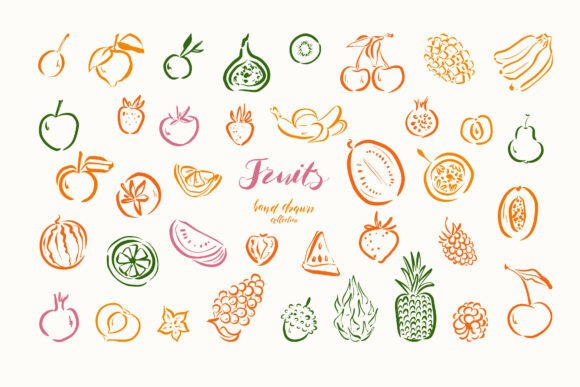
Reviewing the Drawn Fruit Sketch Collection Vector
As a designer who has spent countless hours digitizing artwork and troubleshooting stitch-outs on client projects, I approach every new asset with a mix of curiosity and skepticism. We are constantly hunting for design assets that bridge the gap between digital aesthetics and tangible craft. Recently, I evaluated the Drawn Fruit Sketch Collection Vector to determine its viability for real-world application. This isn’t just about whether it looks pretty on a screen; it is about how these hand-drawn elements translate when needle meets fabric.
The first impression of this collection is its organic, imperfect charm. Unlike rigid, geometric vectors, these sketches carry the weight of human handiwork. For an embroidery designer, this is both a blessing and a challenge. The loose lines suggest movement and freshness, making them ideal for brands that want to appear approachable and artisanal. However, "sketchy" lines can be notoriously difficult to convert into clean machine embroidery design paths without losing their character or creating a messy stitch-out.
From Screen to Stitch: A Real-World Test
To truly understand the potential of the Drawn Fruit Sketch Collection Vector, I imagined a specific scenario: a local boutique owner launching a line of eco-friendly kitchen textiles. She needed a tote bag design and matching tea towels that felt whimsical yet sophisticated. The goal was to create a handmade product that stood out in a crowded market of mass-produced goods.
In this context, the fruit sketches performed exceptionally well as conceptual bases. Because the source files are SVGs, they offer scalability without pixelation, which is crucial when preparing printable mockup previews for an online store. I visualized a simple lemon sketch centered on a natural linen tote. The irregular lines of the vector would translate beautifully into a running stitch or a light satin stitch border, avoiding the heavy, plastic-like look that dense fill stitch areas often create on lightweight fabrics.
For custom apparel, such as a oversized sweatshirt, these graphics could serve as a large back print or a subtle chest pocket accent. The versatility of the Illustrations allows for creative placement. A cluster of berries might work well on a pillow cover, while a single sliced citrus could anchor a personalized gift like a monogrammed apron. The key is recognizing that these are starting points. As Graphics, they provide the shape, but the embroiderer provides the texture.
Navigating Technical Challenges
While the aesthetic appeal is high, practical application requires caution. Not every surface is friendly to sketch-style designs. When working with stretchy fabric like jersey knits for baby embroidery items, loose lines can distort easily if the stabilizer choice is incorrect. I would advise against using these detailed sketches on highly textured fabrics like heavy wool or terry cloth, where fine lines might get lost in the pile.
Another critical consideration is stitch density. Hand-drawn vectors often contain overlapping lines or chaotic shading. If you attempt to stitch every line exactly as seen in the vector, you risk creating a dense, puckered mess. Experienced digitizers know to simplify these paths. You must decide which lines are essential for recognition and which can be omitted. For example, in a embroidered patch, you might want to bolden the outer contours and remove internal shading entirely to ensure durability and clarity.
Small hoop sizes also present a hurdle. If you are designing for a cap or a small holiday embroidery ornament, the intricate details of a complex fruit sketch may not survive the reduction in scale. Tiny corners and thin lines can break or look like random noise when shrunk down. Always test the design on scrap fabric at the intended size before committing to the final finished product.
Enhancing Brand Value and Customer Trust
For Etsy sellers and craft business owners, the perceived value of a product is heavily influenced by its presentation. Using unique, hand-drawn elements like those in the Drawn Fruit Sketch Collection Vector helps differentiate your small shop product from competitors using generic clipart. It signals attention to detail and artistic intent.
When customers see a well-executed sweatshirt embroidery featuring a custom-digitized sketch, they perceive higher quality. This builds trust and encourages repeat business. Furthermore, these designs are excellent for commercial embroidery projects where branding needs to feel organic rather than corporate. A cafe owner might use these fruit sketches on menu boards or staff uniforms to reinforce a fresh, natural brand identity.
Practical Notes for Designers
Before integrating this collection into your workflow, consider these professional tips:
- Test on Scrap Fabric: Always run a test stitch-out on the same material you plan to use for the final item. This reveals issues with tension and registration.
- Check Thread Color Contrast: Sketch styles rely on line visibility. Ensure your thread colors contrast sufficiently with the fabric background, especially for dark fabric projects.
- Review Stitch Density: Simplify complex vector paths. Remove redundant lines to prevent excessive stitching and fabric distortion.
- Confirm Hoop Size: Ensure the design fits comfortably within your machine’s hoop, leaving adequate margin for stabilization.
- Inspect Small Details: Zoom in on the vector to identify tiny fragments that may not stitch well. Delete or merge these elements.
- Mockup in Black and White: Convert the design to grayscale to check for value contrast. If it looks muddy in black and white, it will likely look unclear when stitched.
- Verify Licensing: Since this is a digital asset, confirm the license terms. Ensure you have the right to use the digital embroidery file derivative for commercial sales if you are selling finished product items.
The Drawn Fruit Sketch Collection Vector is a powerful tool for creators who understand the nuances of translation from screen to stitch. It is not a plug-and-play solution for beginners who expect perfect results without adjustment. However, for experienced designers and apparel decorators, it offers a rich foundation for creating unique, high-value items. Whether you are crafting a wedding gift, stocking your boutique with nursery decor, or expanding your digital product offerings, these sketches provide the artistic flair needed to captivate your audience. Just remember to respect the material limits of embroidery and digitize with intention.